Can You Upgrade From Removable Dentures to Dental Implants?
Whether denture wearers can switch to dental implants, and what an assessment will look at first.
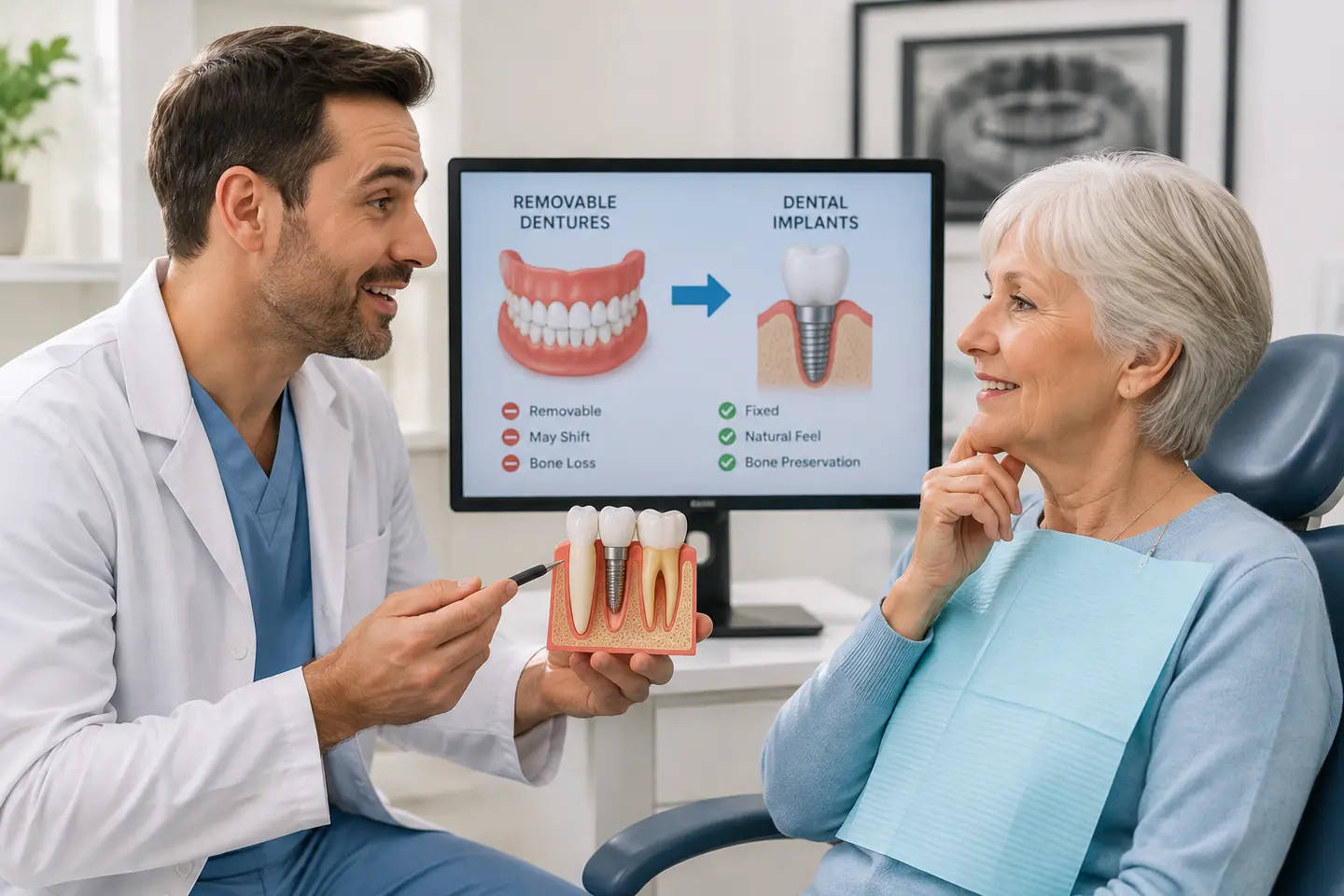
If you wear removable dentures, chances are you’ve had this thought at least once, probably while biting into an apple or when your denture slipped mid-conversation: is it too late for me to get implants instead? A lot of people assume that once you’ve gone down the denture route, that’s the path you’re stuck on for good. It’s one of the most common misconceptions we hear at Egham Dental Care. It is not true. Most people who currently wear removable dentures can be considered for dental implants. Some of our patients have made this move.
The worry usually comes from somewhere understandable. Maybe you were told years ago that implants weren’t an option for you. Maybe you’ve heard bone loss makes it impossible. Or maybe you’ve just assumed dentures were the end of the road once you committed to them. Let’s sort this out properly, because the reality is more encouraging than most people expect.
Why people think they can’t switch
There are a few reasons this misconception sticks around. Firstly, many people were fitted with dentures years or even decades ago, back when implant dentistry was less advanced and far less widely offered. What was true then isn’t necessarily true now. Secondly, some people have been told they don’t have enough jawbone to support an implant, without anyone mentioning that bone grafting or alternative techniques might still make treatment possible. Thirdly, there’s a general assumption that switching between treatments is complicated, or simply not worth the hassle at this stage.
None of these reasons mean the door is shut for good. It just means you need a proper assessment to understand your own situation, rather than relying on assumptions made years ago or things you’ve picked up second-hand.
What actually determines whether you can switch
Suitability comes down to a few specific factors. And these need checking individually, not assumed either way.
Bone density and volume
Dental implants need a certain amount of healthy jawbone to fuse with, through a process called osseointegration. When teeth are missing for a long stretch, particularly under a removable denture, the jawbone can gradually shrink from lack of use. That doesn’t automatically rule out implants, though. In many cases, bone grafting can rebuild the area. Or techniques such as shorter implants, or implants placed at different angles, can work around reduced bone volume. It’s only in more limited cases that bone loss becomes a genuine barrier, and even then, alternatives can sometimes be discussed.
Gum health
Healthy gums are needed to support implants long term. If gum disease is present, this generally needs treating and settling down first. That’s not a reason to give up on implants altogether. It’s simply a step that comes before treatment.
General health and lifestyle
Certain health conditions and habits (uncontrolled diabetes or heavy smoking, for example) can affect healing and implant success. These get discussed openly during a consultation. Not as a way of turning people away, but so your expectations are realistic and any risks are properly understood beforehand.
Type of denture you currently wear
Whether you wear a full denture or a partial denture also shapes the conversation. Some people want to replace an entire denture with a fixed implant-supported bridge. Others are looking at an implant-retained denture, which clips onto implants for better stability while still coming out for cleaning. Both are legitimate options depending on your bone levels and personal preference.
What the upgrade process actually looks like
If you’re considering moving from removable dentures to implants, the process usually starts with a thorough examination, including X-rays or a CT scan to work out bone volume accurately. This isn’t something anyone can judge by eye. So imaging matters here: it gives you an honest picture of where you actually stand.
From there, a treatment plan gets built around your specific mouth. If bone grafting is needed, that’s done and left to heal before implants go in. Once implants are placed and have fused with the bone (which typically takes three to six months), the final restoration goes in, whether that’s a fixed bridge or an implant-retained denture.
Worth being clear here: this isn’t an overnight transformation. It’s a staged process, and healing times vary from person to person. But for many people who’ve spent years dealing with loose dentures, denture adhesive, and steering clear of certain foods, the eventual outcome is a real, noticeable improvement in day-to-day comfort and confidence.
Why people choose to make the switch
The reasons people give for wanting to move from dentures to implants are fairly consistent. Some are just tired of the practical headaches, the adhesive, the clicking noises, the denture shifting mid-meal or mid-sentence. Others worry about the long-term effect of bone loss on their facial shape, since a shrinking jawbone can eventually change how the lower face looks. For some, it’s simply about eating a wider range of foods without a second thought.
None of these reasons are unusual. And none of them mean your current denture has let you down. Dentures remain a perfectly reasonable option for plenty of people. Implants are just a different route that some people want to explore once they realise it’s genuinely available to them.
Having an honest conversation first
Here’s the thing: the most useful step, if you’re curious about switching, is a proper consultation, not assumptions, not old advice, not something you read online at midnight. Every mouth is different. Bone levels, gum health, and general suitability need assessing on an individual basis, not generalised from someone else’s experience.
Book a free consultation at Egham Dental Care in Old Windsor on 01784 773 414 to discuss upgrading removable dentures to dental implants.

Call us or book your free consultation. We’re always happy to chat.
Frequently asked questions
Everything you need to know before your first appointment.
Can I get implants if I have worn dentures for many years?
In many cases, yes. Long-term denture wear can lead to some bone loss, but that doesn’t automatically rule out implants. A scan will show how much bone is available and whether grafting might be needed first.
Is bone grafting always necessary when switching from dentures to implants?
No. Some people already have enough bone volume. Grafting only gets recommended when imaging shows it’s genuinely needed to support the implant properly.
Will I still need a removable appliance after getting implants?
Not necessarily. Some people move to a fixed bridge, while others prefer an implant-retained denture that clips into place but still comes out for cleaning. It depends on your bone structure and personal preference.
How long does the process take from consultation to finished treatment?
That varies, depending on whether grafting is needed and how long healing takes. It’s a staged process rather than a single appointment, often spanning several months in total.
Does age affect whether I can switch to implants?
Not on its own, usually. What matters more is bone health, gum health, and general medical history, which is exactly why an individual assessment matters regardless of age.
Can I switch to implants if I was told years ago that I couldn’t?
Possibly. Implant dentistry has advanced, so what was true years ago may not be true now. A proper assessment is needed to understand your own situation.
What if I don’t have enough jawbone for dental implants?
Bone grafting can often rebuild the area, or techniques such as shorter or angled implants can work around reduced bone. Bone loss is only a genuine barrier in more limited cases.
What is an implant-retained denture?
A denture that clips onto implants for better stability, while still coming out for cleaning.
Do I need gum disease treated before implants?
If gum disease is present, it generally needs treating and settling down first. It is simply a step that comes before implant treatment.
Why do people switch from dentures to implants?
Common reasons include being tired of adhesive, clicking and slipping dentures, concern about bone loss changing the shape of the face, and wanting to eat a wider range of foods.
What our patients say.
"I’m a terrible patient, I’m anxious and I don’t floss! But Darren is an amazing hygienist he’s SO patient and gives practical advice to improve your oral health. He respects the anxiousness and always offers to give a break, which is highly appreciated ! And Dr Kiran is EPIC! Gentle hands and kind, matches your anxiousness with a careful pace , highly recommend her for fillings and regular check ups. She has also treated my husband for TMJ. After a lot of consideration and multiple opinions we are grateful to have gone with her as she has been so good at every step. So if you’re unfortunate to have bigger problems than just fillings, she’s fantastic at that too! And I have to add that Preeti at reception is always so helpful and friendly - and gives great advice!"
"It's been a few most since we started the journey of repairing the damage I've done to my teeth over the years and I don't normally hear from people that it's pleasure to go to the dentist but for me it is, he's patient, polite and chatty. He talks me through the next steps and gives me encouragement. Previous dentists was unpleasant and I always dreaded going but now I don't."
"I just wanted to say such a huge Thank you to the team at Egham Dental Practice for their care and professionalism today. I was absolutely dreading having my tooth out as I’m a very nervous patient but honestly Dr Jatin couldn’t have been kinder or more patient with me. Thank you."
"I had a broken tooth, and they accepted me an emergency appointment and fixed for me same day. Excellent service and very reliable dentist. I would definitely consider them for next time. Pricing was a bit expensive but 100% worth saving my day"
"very good! very kindly staff and the doctor very professional."
"What a great team. Very friendly and professional.They make you feel comfortable and at ease within the surgery. Excellent dental care. Recommended."
"Always an easy visit. Won’t say a pleasure but dentist never is. Everyone always kind and considerate. Special mention to Darren who kindly helped me with the stairs which are difficult for me. You have kindly agreed to see I am treated downstairs in future so will see you again in April. Many thanks"
"all good and very professional as usual. highly recommended."
We’re in Old Windsor.
96 Straight Road, Old Windsor, Berkshire, SL4 2RX. Free parking and easy access from Egham and Windsor.
Thank you, we have received your request
We will be in touch to arrange your complimentary consultation.
Book your free consultation.
No obligations. Honest advice. A clear treatment plan and a warm welcome at our Old Windsor practice.
Book a free consultationMeet the team